Business· Kamal F 6 min read
Why Profitable Businesses Run Out of Money
Profit is an opinion about timing. Cash is a fact. Most businesses that fail were profitable on paper the month they died — here is the gap that kills them.
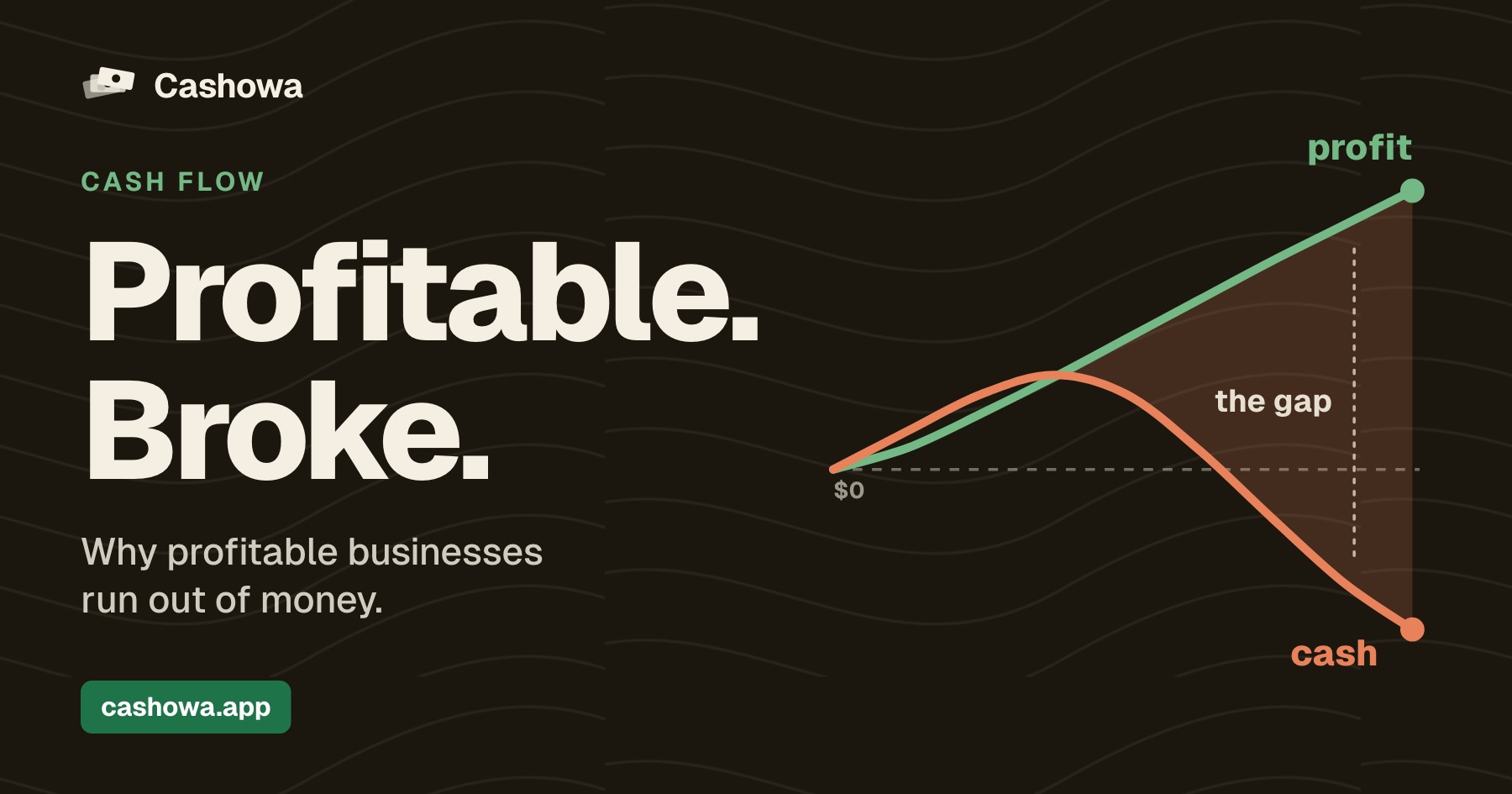
A business can be profitable every month of its life and still run out of money and close. This is not a paradox and it is not rare — it is the single most common way otherwise healthy small businesses die, and the reason is that profit and cash are not the same thing and are not even measured over the same period.
Profit is an opinion about timing. Cash is a fact. When those two diverge far enough and for long enough, the fact wins.
See your real cash position by month, from statements you already have
Track your cash flow freeThe same job, told two ways
You complete an $8,000 project. You invoice on the first of the month. Your profit and loss statement records $8,000 of revenue that day, and from that moment the job looks finished and profitable.
Your bank account tells a different story.
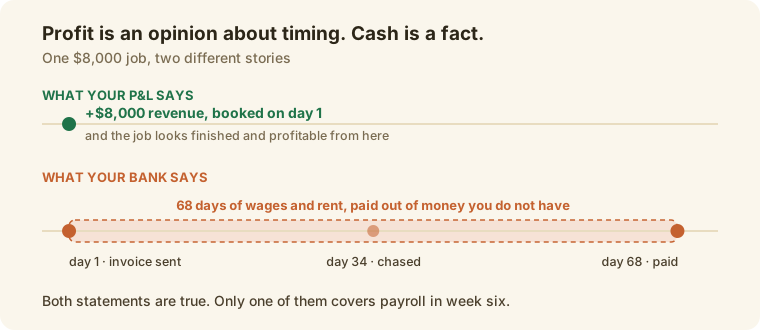
Your client's payment terms are 30 days. Their accounts department runs payment batches twice a month. Your invoice arrives two days after a batch, so it waits. Then somebody is on holiday. You chase on day 34, politely. The money lands on day 68.
Meanwhile you have paid a subcontractor, your own rent, your software subscriptions, and — if you have staff — two payroll runs. All of it from money you have not yet received, on a job your accounts say was profitable on day one.
Both statements are true. Only one of them covers payroll in week six.
Four ways profitable businesses run out of money
Payment terms you did not negotiate. Thirty days is a default, not a law. Sixty and ninety-day terms are common with larger clients, and the larger the client the more likely they are to set terms rather than accept yours.
Stock. Every pound of inventory is cash converted into something you cannot spend. A product business growing at 40% a year is converting cash into stock faster than the stock converts back, which is why fast growth and cash crisis arrive together so often.
Tax that was never yours. Sales tax or VAT you have collected is not income — it is money you are holding for the tax authority. Income and corporate tax accrue all year and arrive as one bill. Both feel like available cash right up until they are not.
Growth itself. This is the cruel one. Doubling your orders doubles your up-front costs immediately and doubles your receipts sixty days later. The better the month, the worse the squeeze. Businesses do genuinely fail from growing too fast.
The number to actually watch
Not profit. Cash in the account, divided by your monthly fixed costs. That is your runway in months, and it is the figure that decides whether you can turn bad work down, absorb a late payer, or survive a quiet quarter.
Most owners can tell you roughly what they earned last month. Very few can tell you their runway without opening a spreadsheet, and that asymmetry is the problem in one sentence.
A second figure worth knowing: how long your money is actually tied up. Add the days your stock sits before selling to the days your invoices sit before being paid, then subtract the days you take to pay your own suppliers. That is the cash gap you are funding yourself, and if it is sixty days you need roughly two months of costs in the bank just to stand still.
Five things that close the gap
Invoice the day the work is done, not at month end. If your terms are 30 days, invoicing on the 28th rather than the 1st costs you nothing and brings the money forward by four weeks. It is the cheapest cash-flow improvement available to anyone.
Charge deposits. Fifty percent up front on project work turns a 68-day gap into a 34-day one. Clients who object to deposits are frequently the ones who pay late.
Know what late payment is allowed to cost. In the UK, statutory interest and fixed compensation apply to commercial debts by law — you do not need it written into the contract. In the US it is whatever your invoice terms say, which is a reason to have terms. Our piece on the invoice chasing script and what UK law lets you charge covers the amounts.
Separate the tax. Move sales tax or VAT, and an estimate of income tax, out of your main account as the money arrives. Not into a mental category — into a different account. Money you can see is money you will spend.
Project forward, not backward. Last month's figures tell you what happened. What you need is the next ninety days: what is committed to go out, what is realistically coming in, and where the lowest point is. The gap is almost always visible six weeks before it bites, and almost never looked for.
Why this is hard to see
Because the accounting is not wrong. Your P&L is correctly reporting that you earned $8,000 in a month you earned $8,000. The problem is that it is answering a question about performance while you are facing a question about solvency, and those are different questions with different answers.
If you only look at one report a month, look at the bank, by month, against your fixed costs. It is less flattering than the profit figure and considerably more useful.
Frequently asked questions
How can a profitable business run out of money?
Because profit records revenue when it is earned, while cash records it when it arrives. If you invoice $8,000 on day one and are paid on day 68, your accounts show a profitable month while your bank account funds two months of costs. Add stock, VAT held for HMRC, and growth, and the gap widens faster than profit closes it.
What is the difference between profit and cash flow?
Profit is revenue minus costs over a period, regardless of when money moves. Cash flow is money actually entering and leaving your account. A business can have strong profit and negative cash flow at the same time, and it is the cash position that determines whether it can pay anyone.
How much cash should a small business keep?
A common benchmark is three to six months of fixed costs, but the figure that matters is your own cash gap — the days your stock and invoices tie money up, minus the days you take to pay suppliers. If that gap is sixty days you need roughly two months of costs in reserve simply to operate normally.
Why does fast growth cause cash flow problems?
Because growth brings costs forward and receipts back. Doubling orders doubles your materials, labor and stock spending immediately, while the payment for those orders arrives on your usual terms weeks later. The better the sales month, the larger the gap it opens.
What is the fastest way to improve cash flow?
Invoice the moment work is complete rather than at month end, and take deposits on project work. Neither requires a difficult conversation about price, and both pull the same revenue forward by weeks.