Business· Kamal F 5 min read
You Don't Need a Bookkeeper Yet — Here's What You Actually Need
Most people asking the question are in the one situation where the answer is no. Here is what to do instead, and the specific signals that mean it is time to hire.
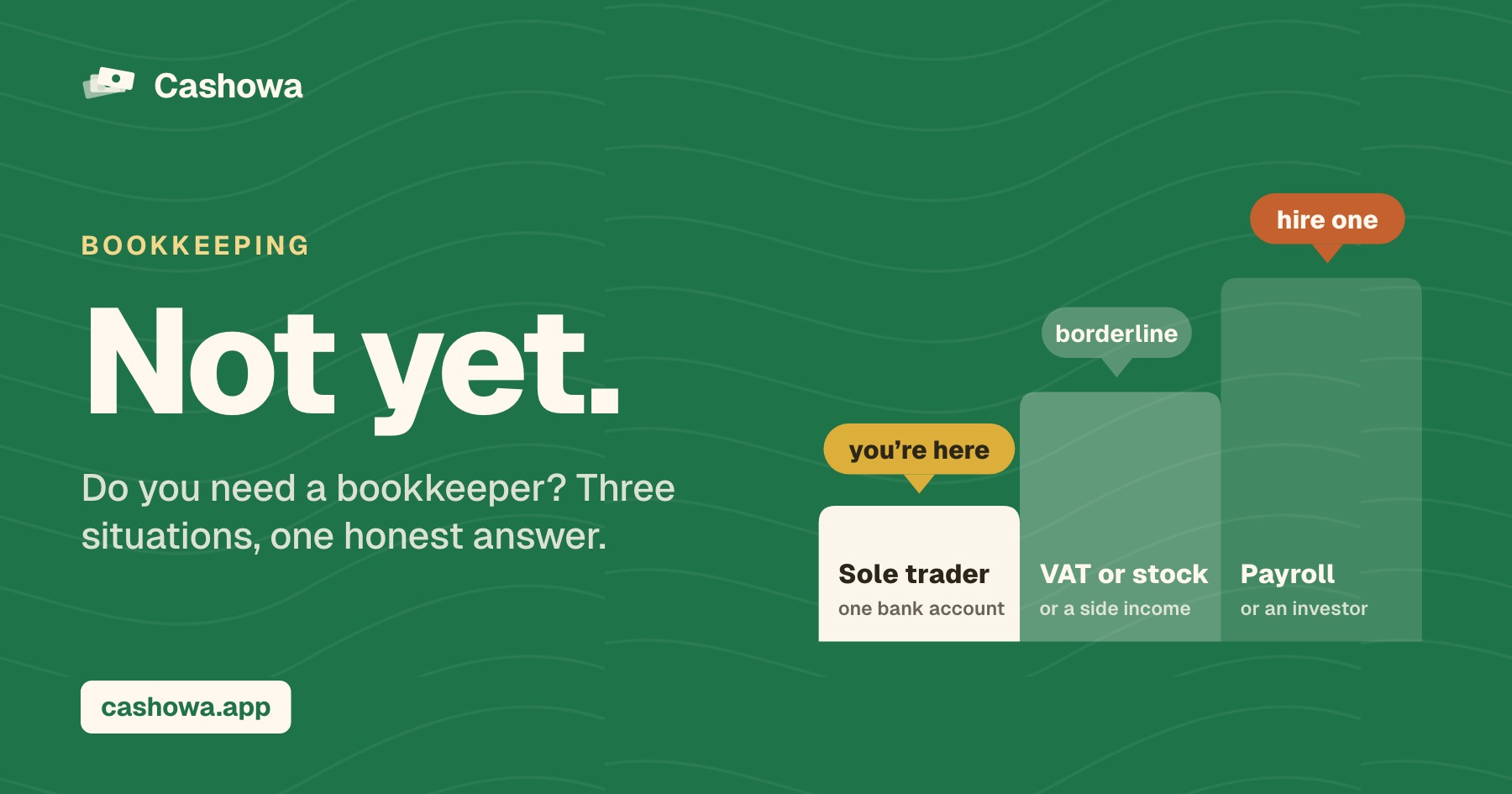
"Do I need a bookkeeper?" is usually asked by somebody who does not, and the reason they are asking is rarely bookkeeping. It is that their records are a mess, they feel behind, and hiring someone looks like the way to stop feeling like that.
Sometimes it is. Frequently it is paying a professional $200 a month to impose order you could impose yourself in an afternoon — and which you will understand far better for having done once.
Categorise a year of transactions from one statement upload
See what the free plan coversDo I need a bookkeeper? Three situations
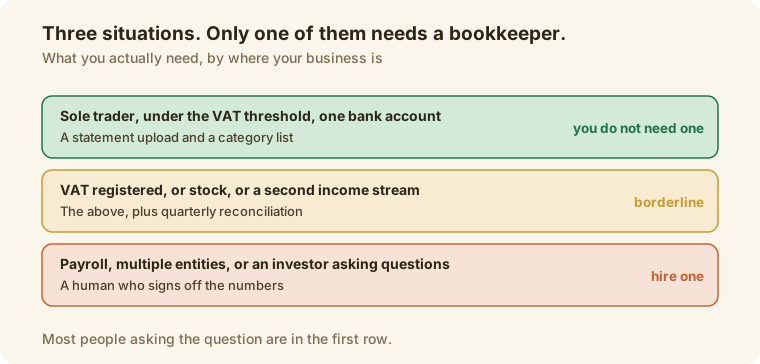
Sole proprietor (sole trader in the UK), under your VAT or sales-tax registration threshold, one business account. You do not need a bookkeeper. What you need is a list of categories and a monthly habit. Your obligation is one tax return a year — Schedule C with your Form 1040 in the US, Self Assessment in the UK — and tax authorities require you to keep records, not to keep them in double-entry: see the IRS and HMRC guidance.
Registered for VAT or sales tax, or holding stock, or running a second income stream. Borderline. The volume is still manageable alone, but the consequences of getting it wrong have grown — a sales-tax or VAT return comes round regularly and late ones are penalized, and stock valuation affects your taxable profit. Many people in this tier do their own records and pay an accountant once a year to check them, which is cheaper than monthly bookkeeping and catches most of the risk.
Payroll, multiple entities, or an investor asking questions. Hire someone. Payroll has statutory deadlines with automatic penalties, intercompany transactions are genuinely easy to get wrong, and when somebody external is relying on your numbers you want a human who will sign their name to them.
Most people asking the question are in the first row.
What "doing it yourself" actually involves
Less than people imagine. Four things, and only the first takes any real effort.
Separate business from personal. You do not need a business bank account as a sole proprietor — you need a consistent boundary. A separate account is the easiest way to get one, and makes the other three steps trivial. Mixing them is the single thing that turns an hour of bookkeeping into a day of archaeology.
Categorise every transaction, monthly. Not weekly, not annually. Monthly, because a month of unfamiliar transactions is a thirty-minute job and a year of them is a lost weekend where you will guess at half of it.
Keep the evidence. Photograph receipts as you get them. The IRS generally wants records for three years after you file — six if you under-reported income by more than 25%, four for employment-tax records — and HMRC for five years after the January filing deadline. Either way, a photograph is a record.
Set money aside for tax as it arrives. Separate account, as the income lands. This is not bookkeeping, but it is the thing people most regret not doing.
That is the entire job for a business in the first tier. It is not sophisticated and it does not need software costing $30 a month — though it does need something, because a spreadsheet you maintain by hand will not survive contact with a busy quarter.
The four signals that mean it is actually time
Not "I feel behind". These:
A deadline has been missed. Once is a lesson. Twice is a system problem, and buying someone else's system is a legitimate fix.
You are making decisions without numbers. If you cannot say what your margin was last quarter, you are running the business on feel, and the cost of that exceeds a bookkeeper's fee very quickly.
The admin is displacing paid work. If two days a month of bookkeeping costs you two days of billable time, the arithmetic has already decided for you.
Somebody external needs assurance. A lender, an investor, a grant body. They are not buying your spreadsheet.
What a bookkeeper is not for
Worth saying, because the expectation gap causes a lot of disappointment. A bookkeeper records what happened, accurately and on time. They are not an analyst. They will not tell you your pricing is wrong, that one client is funding themselves out of your cash flow, or which product line is quietly unprofitable.
That is a different job, and it is the one most small business owners actually want when they say they need a bookkeeper. Clean records are the input to it — necessary, not sufficient.
So if what you want is to stop feeling behind, start with the boundary and the monthly habit. If what you want is to know what your business is actually doing, that is a question about analysis, and it needs the records first either way.
Frequently asked questions
Do I need a bookkeeper as a sole proprietor or sole trader?
Usually not, if you are under the VAT or sales-tax registration threshold with one business account. Tax authorities require you to keep records, not to keep formal double-entry accounts. A category list and a monthly habit covers the obligation.
When should a small business hire a bookkeeper?
When you have missed a statutory deadline more than once, when you are making decisions without knowing your numbers, when the admin is displacing billable work, or when somebody external — a lender, investor or grant body — needs assurance over your figures.
What is the difference between a bookkeeper and an accountant?
A bookkeeper records transactions accurately and on time. An accountant interprets the result, files returns and advises. Many small businesses do their own records and pay an accountant once a year, which is cheaper than monthly bookkeeping and catches most of the risk.
Do I need a business bank account as a sole proprietor?
Legally no, but you need a consistent boundary between business and personal money, and a separate account is the simplest way to get one. Mixed accounts are the main reason bookkeeping turns from an hour into a day.
How long do I need to keep business records?
In the US, the IRS generally says three years from the date you file — six if you under-reported income by more than 25%, and four for employment-tax records. In the UK, a sole trader should keep records for at least five years after the 31 January filing deadline for that tax year. Photographs of receipts count as records.