Numbers for sellers· Jane Wilson 5 min read
Do I Need to Tell HMRC if I Sell on Etsy? A Three-Question Check
A short check for UK sellers: are you trading, is your gross income over £1,000 in the tax year, and have you registered by 5 October. General information, not tax advice.
The answer to "do I need to tell HMRC if I sell on Etsy?" depends on three questions: are you trading, is your gross trading income over £1,000 (about $1,350) in the tax year, and have you registered for Self Assessment by the deadline. If you are trading and you went over £1,000, you generally have to tell HMRC. If you are under £1,000, you generally do not, with exceptions. This is general information for sellers who live in the UK, built from GOV.UK's and Etsy's own pages as read on November 16, 2026, and it is not tax advice. Our longer guide to Etsy seller tax in the UK covers the same ground in more detail.
Check how close you are to the VAT threshold
Try the VAT threshold calculatorDo I need to tell HMRC if I sell on Etsy? Question 1: are you trading?
GOV.UK's page on checking whether you need to tell HMRC about income from online platforms says you are probably trading if you sell goods you bought intending to sell at a profit, or goods you made, and it includes items you make for a hobby. Income from different trading activities is added together. If you are only selling your own personal possessions, you probably do not owe Income Tax on them, though an item sold for more than £6,000 (about $8,100) may bring Capital Gains Tax.
An Etsy shop that sells what you make is, in HMRC's terms, probably trading, even if it began as a hobby.
Question 2: is your gross trading income over £1,000?
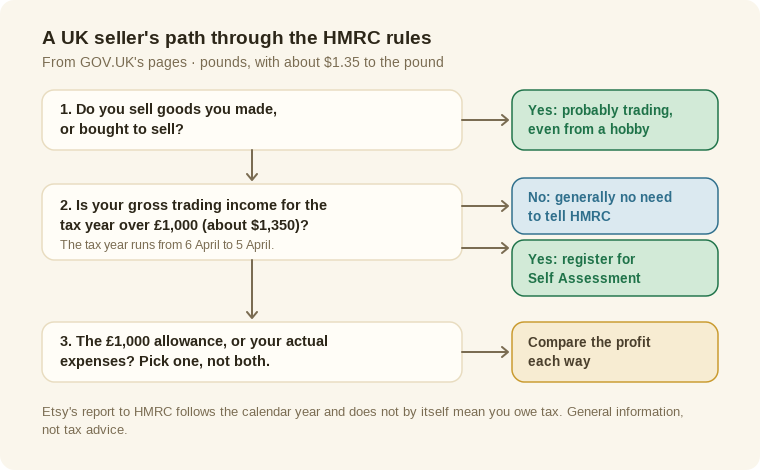
GOV.UK's guidance on tax-free allowances on property and trading income describes a tax exemption of up to £1,000 a year for individuals with trading income. It says that if your gross trading income is £1,000 or less you generally do not need to tell HMRC, with exceptions, for example if you cannot use the allowance. Gross means what customers paid before you take off costs, so the question is about your sales, not your profit. The tax year runs from 6 April to 5 April.
If you go over £1,000, you register for Self Assessment, and you then choose between using the allowance and deducting your actual expenses. You cannot do both.
Question 3: have you registered in time?
GOV.UK's page on becoming a sole trader says you must register for Self Assessment if you earn more than £1,000 in a tax year, and you can register earlier if you choose. Its page on Self Assessment deadlines says you must tell HMRC by 5 October if you need to complete a tax return for the previous year. That was 5 October 2026 for the 2025 to 2026 tax year, with 31 January 2027 as the date for the online return and for paying the tax. Check the page for the year you are in.
What Etsy reports does not decide it
Etsy's help page on what Etsy reports for sellers in the EU, UK and Canada says it reports to HMRC a seller who has 30 or more sales of physical goods in a calendar year, or sales of physical goods of 2,000 euros or more after taxes and fees, or any sales of made-to-order digital items. GOV.UK's page on selling on a digital platform says a platform reporting your details does not automatically mean you owe tax: tax applies if you are trading or making a capital gain. So being reported is not the test, and not being reported does not mean you have nothing to tell HMRC either.
What to do next
- Add up your gross sales for the tax year, from all your platforms together.
- If you are trading and over £1,000, register for Self Assessment before the 5 October deadline that follows the tax year.
- Keep every record: sales reports, fees, materials, postage and packaging. Our guide to bookkeeping for online sellers sets out a routine that takes thirty minutes a month.
- Look at VAT separately. The VAT threshold works on a rolling twelve months, and our VAT threshold calculator and the guide to the rolling window show how close you are.
- Ask an accountant if your situation is not simple.
Where Cashowa fits
Cashowa gives no tax advice and does not file anything with HMRC. What it can do is help you keep the numbers the questions above need. The Cash flow page shows revenue, costs and net margin over time from the statements you upload, in pounds if you sell in pounds, and the free VAT threshold calculator shows where you stand against the rolling twelve months. How Cashowa works for sellers says what it reads and keeps.
Frequently asked questions
Do I have to tell HMRC if I only sell a few things on Etsy?
If you are trading, which includes selling things you made even as a hobby, and your gross trading income for the tax year is £1,000 or less, you generally do not need to tell HMRC, with exceptions. If you are only selling your own personal possessions, you probably do not owe Income Tax on them.
What is the £1,000 trading allowance?
A tax exemption of up to £1,000 a year for individuals with trading income. Over £1,000 you register for Self Assessment, and you choose between the allowance and deducting your actual expenses, but not both.
When do I have to register for Self Assessment?
You must tell HMRC by 5 October if you need to complete a tax return for the previous tax year, according to GOV.UK's page on deadlines. The tax year runs from 6 April to 5 April.
Does Etsy tell HMRC about me?
Etsy's help page says it reports UK sellers to HMRC who have 30 or more sales of physical goods in a calendar year, or 2,000 euros or more in sales of physical goods after taxes and fees, or any sales of made-to-order digital items. A report does not by itself mean you owe tax.
The term 'Etsy' is a trademark of Etsy, Inc. This Application uses Etsy's API, but is not endorsed or certified by Etsy.