How Cashowa works· Kamal F 4 min read
I built an AI that negotiates your bills (amongst other features)
A founder story about why Cashowa learned to research competitors, write retention scripts, and draft cancellation emails — and what surprised me about whether it actually works.
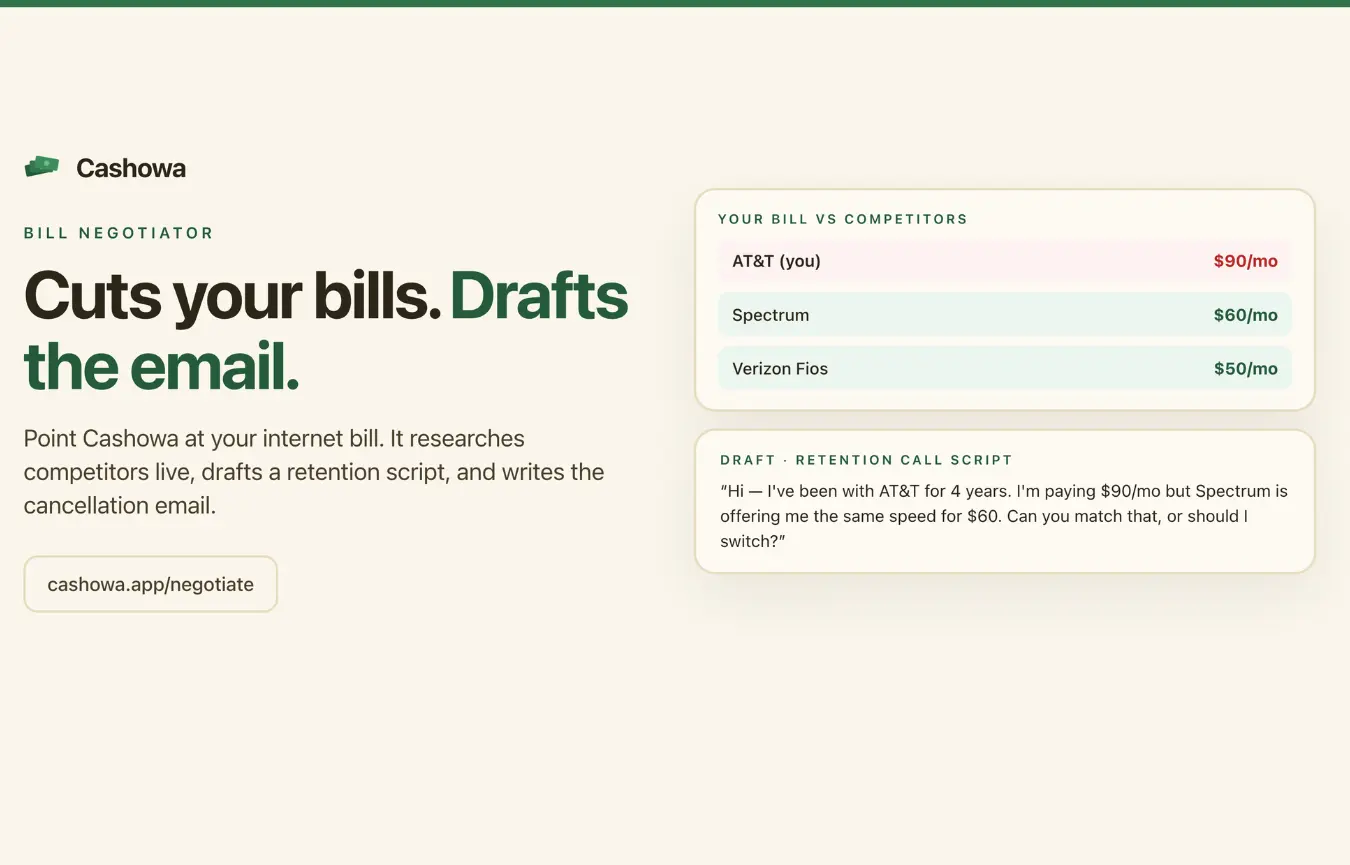
A few months ago I tried to negotiate my AT&T internet bill. I was paying $90 a month for the same service my neighbour was getting for $60. I called the retention line, said the exact thing every blog post tells you to say — "I'm considering switching to Spectrum, can you match their price?" — and was told no.
So I switched. It took an afternoon. Cheaper internet, no contract, mild satisfaction.
What stuck with me was how badly that whole experience could have been compressed. The research (what do my competitors actually charge?) is a 15-minute web search. The script (what do I say on the call?) is a paragraph. The cancellation email is a five-sentence template. Combined: an hour of my Saturday, plus the emotional load of psyching myself up to negotiate with a stranger I'll never meet.
If you have an AI assistant with web access, all of that is a single task.
So I built it.
What the negotiator actually does
Cashowa's bill negotiator is a chat surface with one job. You give it a bill — internet, phone, insurance, streaming, energy, anything recurring — and it does three things in sequence:
- Researches your provider and 2–3 live competitors. Real prices, current promotions, contract terms. Not what the model remembers from training data; what each competitor's pricing page says right now, fetched live during the conversation.
- Writes you a retention call script. Specific to your bill, naming the competitor offers it found, framed for the person on the phone. A retention agent has a quota; the script gives them a graceful way to give you the discount and hit their number.
- Drafts the cancellation email. Polite, dated, asking for written confirmation. So if the retention call doesn't work, you have the cancellation pre-built. The hardest part of cancelling is starting; we removed that part.
You either paste-and-send, or you read the script before the call. Cashowa doesn't dial the phone or send the email — you stay in control of the relationship. That felt important.
What surprised me
I built this expecting it to mostly fail. AT&T isn't going to lower their prices because some user found a competitor on a Tuesday. Right?
The surprise was that it works more often than I expected, but not for the reason I thought.
The discount isn't because the agent magically knows the right secret incantation. It's because most people never actually call. A retention agent's day is full of confused billing complaints, missed-payment apologies, people who don't know what they want. A clear, calm, specific request — "I've been a customer for 4 years, I'm paying $90 a month, Spectrum is offering me the same speed for $60. Can you match that, or should I cancel?" — is statistically rare. So it gets escalated. And the escalated person has authority to offer the discount.